Showing posts with label India Business. Show all posts

Friday, October 9, 2009

Infosys declares 200 per cent interim dividend


Infosys Technologies Ltd has declared an interim dividend of Rs 10 per share or 200 per cent on par value of Rs 5 per share for the first six months (April-September) of this fiscal (2009-10).

In a regulatory filing on Friday, the IT bellwether said the interim dividend to its shareholders was the same as in the corresponding period of the last fiscal (2008-09).

The company has earmarked Rs 5.73 billion (Rs 573 crore) towards the interim dividend at the end of September 30, 2009. The dividend tax outgo will be Rs 970 million (Rs 97 crore).


Courtesy:ibnlive.com
Complete artical HERE

Monday, September 14, 2009

IT's back to business as hiring, hikes return

Six months ago, Indian IT looked like it was staring into a long, dark tunnel—one that might take at least a year to get out of. Today, however,

there’s already a hint of a light at the other end.

Information infrastructure company EMC has just announced that it will invest $1.5 billion in India over the next five years, a level of investment from a single company that the sector has not seen in close to two years.
Manpower supply company TeamLease that saw its open positions drop dramatically from 10,000 a month to 800 post the Wall Street crash, has in the past two months seen those numbers rise to 3,500. Wipro has lifted its freeze on hikes and promotions, at least for some employees.

Partha Iyengar, regional research director in Gartner India, says the number of calls the company gets from customers for directions and consulting has gone up sharply in the last 3-4 months, “indicating that a large number of IT deals will hit the pipeline in the next two quarters”.

The Indian IT industry was one of the worst hit by the recession on account of its almost complete dependence on international markets—especially the US and Europe. The freeze on IT budgets by companies around the world meant that new orders dried up. Industry association Nasscom initially forecast that IT exports would grow by 22-24% in 2008-09, but as the recession deepened, this was revised down to 16%. For this fiscal, the association has projected a mere 4-7% growth to $48-50 billion.

But optimism is making a tentative return. “That phase of drastic downturn is behind us,” says S Ramadorai, CEO of Tata Consultancy Services, India’s biggest IT company. “There’s stability now. The deal pipeline is encouraging, but the time it takes to close a deal remains long. And many customers are yet to fully open up their IT budgets.”


Courtesy:timesofindia.com
Complete artical HERE

Tuesday, September 8, 2009

India is hiring: job outlook best among 35 nations

India has again emerged as the most bullish country in terms of hiring plans, with 25 per cent of the employers intending to recruit people in the next three months.

Wholesale and retail trade along with finance, insurance and real estate sectors are among the most optimistic when it comes to hiring intentions.

Global staffing services firm Manpower has said India has a net employment outlook--a measure of recruiting plans--of 25 per cent for the fourth quarter of 2009, the highest among 35 countries surveyed.

The employment outlook for the next three months is much higher than 19 per cent, forecast for the third quarter of this year.

"Indian employers have absorbed the layoffs conducted in the third quarter and are telling us they will being hiring again at a conservative pace, but most intend to keep their workforces intact through the end of the year," said Manpower India's Managing Director Naresh Malhan.

However, the employment outlook for the fourth quarter of this year (19 per cent) is less by 14 percentage points, as compared to the same period a year ago. India has seen the most favourable hiring environment since the third quarter of 2008, the report said. Nearly 5,637 employers spread across 30 Indian cities were surveyed.

According to Manpower, job seekers in the finance, insurance, real estate, services industry, wholesale and retail trade, public administration and education, mining and construction segment can expect favourable hiring environment.

"Good news is that in the fourth quarter, job seekers in key industry sector can look forward to the most favourable hiring environmen


Courtesy:ibnlive.com
Complete artical HERE

Wednesday, July 15, 2009

Ambani feud may scare away investors


The wrangle over an energy deal between the Ambani brothers has highlighted the risks inherent in an economy dominated by big familybusinesses and spurred calls for the government to intervene.

The latest dispute between the feuding brothers could discourage investment in India's energy sector as the country scrambles to shore up its energy security. It also tests governance standards for a nation that ranks a lowly 180 when it comes to enforcing contracts on the World Bank's index on ease of doing business.

The near-three-year battle between India's top conglomerate Reliance Industries, headed by Mukesh Ambani and Reliance Natural Resources, led by estranged brother Anil will be heard in India's Supreme Court on July 20.

The two sides are fighting over terms of a gas-supply agreement struck when the Reliance empire was split in 2005. The Bombay High Court ruled last month that Reliance Industries should supply gas to Reliance Natural at nearly half the price it had set in an interim order in January.

The gas in dispute comes from the vast Krishna Godavari (KG) basin, and some in India have said terms of access to such a crucial resource in an energy-starved country should not be left in private hands.

"If a private MOU (memorandum of understanding) can involve something that belongs in the public domain, it gives the sense that large corporations can bend rules and influence policy - that's surely got to be the biggest political risk," said Seema Desai, an analyst at risk consultancy Eurasia Group in London.

The government has largely been silent, which could make investors wary, said strategist Arun Kejriwal at KRIS Research.

"It sends a message that the law is different for different people. This is not trivial, it is a matter of national interest," said Kejriwal.


Courtesy:timesofindia.com
Complete artical HERE

Friday, July 10, 2009

Infosys lowers revenue projections for this fiscal


The meltdown has finally caught up with IT bellwether Infosys Technologies, forcing it to marginally lower its quarterly and annual revenue guidance for the first time even as it managed to stay afloat in the first quarter this fiscal.

Infosys saw its revenues decline 2.9 per cent to Rs 5,472 crore in the first quarter, from Rs 5,635 crore in the fourth quarter last fiscal.

Based on this, Infosys has projected a year-on-year (YoY) decline of 1.9-0.1 per cent in the second quarter to Rs 5,318-5,413 crore, as per the Indian accounting standard.

"We believe that in the short-term, the global economic environment will continue to be challenging. We are working closely with our clients to help them navigate the downturn," Infosys chief executive S Gopalakrishnan said in a statement on Friday.

With currency volatility impacting operations, the software major has also forecast that its consolidated revenue for the entire fiscal would decline 1.3 per cent YoY to Rs 21,416 crore or grow fractionally by 0.3 percent YoY to Rs 21,747 crore.

Its earlier projection had pegged the annual revenue at Rs 220.66 billion - Rs 229.28 billion, forecasting a 1.7-5.7 per cent YoY growth..

"The global currency markets continue to be volatile. During the quarter, the rupee appreciated against the dollar from Rs 50.72 to Rs 47.91 on average," said Infosys chief financial officer V Balakrishnan.

In dollar terms too, consolidated revenue is expected to be in the range of $1.11-1.13 billion) in the second quarter, projecting a decline of 8.7-7.1 per cent YoY, as per the International Financial Reporting System (IFRS).

Similarly, for the whole fiscal, consolidated revenue is projected to decline 4.6-3.1 per cent YoY to $4.45-4.52 billion, as per the IFRS.

"We continue to invest in the future to take advantage of the growth opportunities in the medium and long-term," Gopalakrishnan said.

On annualised basis, net profit for the first quarter grew by 17.3 per cent to Rs 1,527 crore from Rs 1,302 crore a year ago, while revenue increased 12.7 per cent to Rs 5,472 crore from Rs 4,854 crore in the same period year ago, as per the Indian accounting standard.

"We continue to focus on margins, while making the right investments to accelerate growth," Balakrishnan said.

In dollar terms, net income grew marginally by 1.6 per cent to $313 million from $308 million year ago, while revenue declined 2.9 per cent to $1.12 billion from $1.15 billion in the same quarter year ago, as per the IFRS.

Unfazed by the downturn, Infosys chief operating officer S D Shibulal said the company was winning large deals and had benefited from vendor consolidation with certain clients.


Courtesy:ibnlive.com
Complete artical HERE

Monday, September 8, 2008

Lakshmi Mittal gets Forbes lifetime achievement award


NEW DELHI- American business magazine Forbes on Monday said India-born steel tycoon Lakshmi Mittal is being conferred the third Forbes Lifetime Achievement Award, which honours heroes of entrepreneurial capitalism and free enterprise.

Mittal will get the award tonight at Forbes Global CEO Conference, being held in Singapore and expected to be attended by more than 450 business leaders with a combined net worth of more than 160 billion dollars from across the world.

Earlier in March this year, Forbes had named Mittal as fourth richest with a net worth of 45 billion dollars in its annual ranking of the world's richest billionaires.

"Mittal will receive the third Malcolm S Forbes Lifetime Achievement Award at the opening dinner tonight from Steve Forbes, Chairman & CEO of Forbes, and Editor-in-Chief of Forbes magazine," Forbes said in a statement.

"The award honors heroes of entrepreneurial capitalism and those who embody and exemplify the ideals of free enterprise," it added.

Born in Rajasthan in India, Mittal founded Mittal Steel Company (formerly LNM Group) in 1976.

Courtesy:timesofindia.com
Complete artical HERE

Nano to say tata to Singur, no truce likely


It could be the end of the road for Tata Motor’s Nano project in West Bengal. Government sources told CNN-IBN that there is unlikely to be a solution to the Singur deadlock.

According to sources in the state government, the committee on land review was not likely to find a solution as the mother plant and ancillary units cannot be separated.

An accord was reached between the state government and the Opposition parties on Sunday night after a series of meetings mediated by Governor Gopal Krishna Gandhi.

However, in a strongly worded press statement, Tata Motors on Monday said it would not resume work in its small-car plant in Singur, claiming that the outcome of talks between the government and opposition parties to end protests against the project lacked clarity.

At the end of talks mediated by Gandhi, an official statement said that the government would respond to the demands of those farmers who have not received compensation and asked vendors of Tata Motors not to go ahead with construction of their respective facilities in the meantime.

The company said that it would review its stated position only if it was satisfied that the viability of the project was not being impinged.

Tata Motors' statement came a day after Trinamool Congress chief Mamata Banerjee suspended her indefinite dharna on Sunday night following an agreement with the state government.

Meanwhile, movement of traffic resumed on both lanes of the Durgapur Expressway on Monday morning with the Trinamool chief suspending her two-week long dharna near the Tata Motors' small car plant.

As per the agreement, the state government will form a committee to look into the demands of the affected farmers, and submit its report in seven days.


Courtesy:ibnllive.com
Complete artical HERE

Tuesday, September 2, 2008

Maruti not planning an ultra-low-cost car


Maruti Suzuki India Ltd, India's top car maker, sees a greater focus on fuel-efficient small cars, hybrids, electric and multi-fuel cars, but has no plans to launch an ultra-cheap small car.

Chairman R.C. Bhargava told a shareholders' meeting on Tuesday that Japan's Suzuki Motor Corp, which owns 54.2 percent of Maruti, wanted to shift to India the bulk of its research and development on cars with engine capacity of 1200 cc or lower.

"Now 60-70 per cent of it is being developed in Japan. Suzuki wants to make 90 per cent in India," he said without elaborating.

Maruti Suzuki has about half of the Indian car market, with models such as the best-selling Alto and Swift hatchbacks, and has been shifting consumers to premium models such as the DZire sedan.

But the high cost of inputs such as steel have hit margins, while surging inflation, rising interest rates and higher fuel prices have hurt demand in Asia's third-largest economy.

"Oil prices had reached from $60-70 per barrel to $140 a barrel. That $60-70 level will never come back," Bhargava said.

Competition is set to increase with Tata Motors scheduled to soon launch the Nano, billed as the world's cheapest car with a price tag of about $2,500, and a clutch of others including Honda eyeing the small car market.

General Motors said last week it planned to launch a global small car, which would have design inputs from India, in the second half of 2009.

"Over the last few years, many cars have come into the market and you will agree that Maruti has not failed to compete," Bhargava said.

But in its annual report, Maruti said it would stay out of the ultra-low-cost car segment as it expected rising incomes and changing lifestyles to increase demand for well-designed and feature-rich compacts in India.

Maruti sold 711,818 cars in India in the 2007/08 fiscal year that ended in March, and has targets of 1 million local sales and 200,000 exported vehicles by 2010/11.


Courtesy:timesofindia.com
Complete artical HERE

Saturday, August 30, 2008

Microchip Technology to invest $65 mn in India


Bangalore, August 29: One of the leading providers of micro-controller and analong semiconductors, Microchip Technology Inc., on Friday announced that it would invest USD 65 million in India over the next five years.

The investment was expected to create 300 new jobs at its wholly-owned facility, the India Development Centre located at Whitefield on the city outskirts, Microchip Technology Executive Vice-President Ganesh Moorthy told reporters in Bangalore after the formal inauguration of the Centre.

“The investment is our reaffirmation to long term growth in R & D and sales in India”, he said.

At its facility in Bangalore, the company, with over USD one billion in sales last year,focuses on new product development, enhancing its IT capability, customer support and application areas to grow business in India and strengthen R&D activities, he said.

“Not only are we impressed by the quality of the workforce available in India, we also see opportunity in the emergence of many Indian Companies as global powerhouses in the development of embedded systems”, Moorthy said.


Courtesy:expressindia.com
Complete artical HERE

Tuesday, August 26, 2008

Singur sows seeds of unrest


The stalemate over the Tata Motors small car project in Singur, West Bengal, continues with Trinamool Congress leader Mamata Banerjee refusing to end her protest against the factory.

Chief Minister Buddhadeb Bhattacharjee, who on Monday again urged Banerjee to end her protest, has said the car project is vital for Bengal’s process and cannot be abandoned. "We have to solve the issue for the sake of industrialisation in the state. We can't let the Tatas to move out of West Bengal," he said.

Banerjee remains firm on her demand that 400 acres of farmland taken for ancillary units to the plant from "unwilling farmers" must be returned to the owners before she begins dialogue with the state government.

Opponents of the car project say their fight is for the farmer whose land is being taken away for industrialisation without his consent and fair compensation. People who want industries say farming can’t support the state’s economy for long and West Bengal must catch up on progress.

The state government had to abandon a plan to build a Special Economic Zone (SEZ) in Nandigram district after clashes between farmers and CPI-M workers last year.

Is Nandigram going to be repeated in Singur? Should farms be sacrificed for industrialisation? CNN-IBN’s Sagarika Ghose asked this on Face The Nation to Derek O’Brien, quizmaster and spokesperson for the Trinamool Congress, Tarun Das, chief mentor of business chamber Confederation of Indian Industries, and Union Commerce Secretary G K Pillai.

Narmada Bachao Andolan activist Chittaroopa Palit was also on the show.

The opposition to the Tata car project in Singur is justified, said O’Brien. “The Trinamool Congress is pro-industry and pro-farmer but the Communists are pro-industry and they make no pretence of being pro-farmer. The basic issue is that the Chief Minister should have got the consensus of all shareholders and all people in Singur when he brought the Tatas here,” he said. “We want dialogue but first 400 acres of farmland taken from unwilling farmers must be returned.”


Courtesy:ibnlive.com
Complete artical HERE

Friday, July 18, 2008

Maruti holds mela in Nano backyard


Kolkata, July 17 (IANS) Car maker Maruti Suzuki India Ltd held an exhibition of its small cars Thursday at Singur, from where Tata Motors' Nano, the world's cheapest car, is set to roll out in October.

The fair, held at the Singur Club ground in West Bengal's Hooghly district, drew a large number of cash-rich farmers, rural self-governing executive members and rural bank employees.

Besides, the fair was also targeted at rural doctors and other rich classes, district sources said.

'This is the first year Maruti Suzuki has conducted any such fair over here,' said an official.

Bhandari Automobiles, which is the distributor of Maruti in Howrah, was the organiser of the event.

Earlier, Tata Group chairman Ratan Tata had accused his business competitors of stoking the fire at Singur when the farmers staged protests against the Nano plant.

But Maruti had issued a quick denial.

Courtesy:aol.in
Complete artical HERE

Monday, May 12, 2008

Anil Ambani goes to Hollywood with blockbuster plans

MUMBAI: In an audacious foray into Hollywood, Reliance Big Entertainment (RBEL), the entertainment arm of the Anil Dhirubhai Ambani Group (ADAG), is learnt to be in negotiations to produce three major movies featuring mainstream Hollywood stars.

A large delegation from ADAG is currently preparing for a major international announcement on May 19 at the Cannes film festival, where these plans will be unveiled. This will be the first time an Indian entertainment firm makes an entry into Hollywood.

According to ADAG insiders, RBEL could announce a slew of international films. The group is trying to rope in Hollywood actors like Tom Cruise, George Clooney and Will Smith. The buzz is that ADAG is also trying to line up Angelina Jolie for the announcements at Cannes.

The movies will target the global audience and will be mainstream Hollywood releases. When contacted, a Reliance-ADAG spokesperson denied the development. The estimated deal size is said to be in the region of $300 million, one of the biggest inked by an Indian entertainment company.

It is unclear whether the company is planning to ink deals with Hollywood studios or with the stars themselves. It is also not clear if the Hollywood stars will finally make an appearance at the ADAG event at the festival.

What is clear is that the ADAG delegation will throw light on its larger entertainment vision for global and Indian markets, which includes its multiplex operations in the West Coast of the US as well as the DTH, animation and film production plans.

Recently, RBEL, which runs cinemas in India through its Adlabs subsidiary, entered the US market under the brand name ‘BIG’. The company has acquired more than 200 theatres across 28 locations in North America, including New York, New Jersey, Atlanta, Detroit, Chicago, San Jose, Los Angeles, Washington DC and Seattle.

These will be used to screen Bollywood and other regional language movies from India and movies from other Asian countries. It has also bought a US-based theatre management company to operate the US chain and has set up a distribution company to license rights.

RBEL is focused on both international and domestic projects, and its vision is to become one of the major entertainment companies worldwide. The entry into mainstream Hollywood projects
is in tandem with this vision.

For Hollywood actors and producers, partnering with an Indian entertainment company would ensure South Asian audiences, apart from having a strong producer and distributor who is able to explore new markets and concepts. The Hollywood plans are in addition to a slew of other announcements on its India plans (first reported in ET on May 10) which ADAG is expected to make in Cannes later this week.

In February, when George Soros invested $100 million in RBEL, the internet, media and entertainment arm of ADAG, for a 3% stake, valuing the company at $3 billion, the move took everyone by surprise. The primary reason was that most of the businesses - held under RBEL - were either at the planning stage or characterised by earnings potential rather than actual earnings.

Courtesy:timesofindia.com
Complete artical HERE

Tuesday, April 15, 2008

India to grow at 9.5 pc in 2008/09: CMIE

India's economy is expected to expand by 9.5 per cent in the current 2008/09 fiscal year, driven by large capacity additions, a Mumbai-based think-tank said on Tuesday. The Centre for Monitoring Indian Economy said the slower growth in last fiscal was an aberration and expects growth to rebound in 2008. The government estimates 2007/08 growth at 8.7 per cent from 9.6 per cent in 2007.
"Our optimism stems from the fact that capex boom in India continues with more and more fresh investments getting announced quarter after quarter," CMIE said, in its monthly review.
CMIE's growth forecast for 2008/09 is much higher than the projections of other analysts.
Last week, Lehman Brothers cut its GDP growth forecast for the fiscal year that began on April 1 to 7.6 per cent from 8.3 per cent. HSBC and JP Morgan expect the GDP to grow 7 per cent.
Manufacturing and construction industries will power the economy in 2008/09, CMIE said. While services may grow 10.6 percent, industry is expected to expand 11.4 per cent and agriculture may grow by 2.9 per cent, it said.

Courtesy:expressindia.com

Complete artical HERE

Friday, April 11, 2008

RIL mulling over new foreign partner

RIL, the country's most valued firm, is mulling over bringing a new strategic foreign partner in its KG Basin D-6 block. Markets gave a thumps up with the stock spiralling to an intra-day high of Rs 2519.Sources have told NDTV that Reliance is willing to get another ally along with its existing partner, Niko Resources, into the giant D6 natural gas block. It may sell 10 per cent equity in the exploration block to the new partner. Meanwhile, bluechip investment bank Goldman Sachs is lining up potential suitors.
The KG Basin has huge reserves estimated at 11 trillion cubic feet. There's no surprise that the biggest names in the business are pouring over the data that shows exactly what lies under water in the Krishna-Godavari basin. The biggies include Exxon Mobil, Shell, BP and Chevron.
And that's not all, Italy's ENI, Brazil's Petrobras and France's Total are also evaluating D6 data.
Sources also said that the deal could be structured as an equity buy for the new partner in which case, it will own exactly the same stake as Niko with RIL holding the remaining 80 per cent.
There's also another option of a swap where RIL gets to participate in overseas projects of its partner while the overseas company gets involved in India's east coast.

Courtesy:ndtv.com

Complete artical HERE

Thursday, February 7, 2008

Maya govt slaps 66 cases on Anil Ambani's company

http://www.themoneytimes.com/filess/ambani%20200.jpg Anil Ambani group's Reliance Infratel Ltd appears to be facing maximum problem in Uttar Pradesh, where the government has filed over five dozen cases on property and stamp duty disputes against the company, which is planning an IPO to raise up to Rs 6,000 crore.
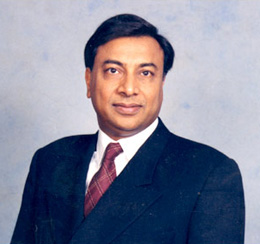
"There have been 66 cases against our company by the Uttar Pradesh Government before the Court of Additional Divisional Commission, Additional District Magistrate or the Collector," said the draft prospectus filed with market regulator SEBI yesterday.

The company has proposed an IPO within days of another group company Reliance Power raising Rs 11,560 crore through a maiden public issue. The issue was oversubscribed 73 times, even as other companies like Emaar and Wockhardt are finding it hard to attract investors.

Most of the cases filed by the UP government against Reliance Infratel pertain to property disputes and payment of stamp duty, the draft red herring prospectus said.

In addition, the company is also facing property related litigations and consumer disputes concerning noise and air pollution in different parts of the country.

Courtesy:ibnlive.com
Complete artical HERE

Indians prefer stashing their cash to saving

While the fear of meeting unforeseen expenses is forcing over 81% of Indian households to save, 36% of households still prefer to stash cash at home — which does not earn any returns — and 51% park their savings in banks.

A countrywide survey of over 60,000 households, released on Wednesday, also shows that only 5% of households put their money in post offices, while 2% buy insurance policies and 0.5% invest in equities. There are 205.9 million households in the country.

At the all-India level, investment in financial instruments, such as small savings, stocks and insurance — accounts for about 3% of the estimated households income.

However, if households that invest in financial instruments are considered, the proportion of their investments to their household income is significantly higher. For instance, the NCAER-Max New York Life survey says, investors in the stock market invest about 22% of their household income compared with 14% in the case of small savings and 4% for life insurance.
Courtesy:timesofindia.com
Complere artical HERE

Tuesday, January 29, 2008

Mittal, Ambanis among 10 richest CEOs: Forbe

http://www.nndb.com/people/222/000094937/mittal-crop.jpgSteel tycoon Lakshmi Mittal along with Ambani brothers – Mukesh and Anil, are among the 10 wealthiest CEOs in the world, according to American magazine Forbes.

Out of the world's 10 wealthiest CEOs, four positions have been taken by Indians – Lakshmi Mittal is ranked at the second place followed by Mukesh Ambani (6th place), Anil Ambani (7th) and Wipro chief Azim Premji (9th).

The list has been topped by Warren Buffet, the Chief Executive of Berkshire Hathaway with a fortune of $52 billion.

Arcelor Mittal chief Lakshmi Mittal has a net worth of $32 billion while Mukesh Ambani and Anil Ambani have fortunes worth $20.1 billion and $18.2 billion, respectively.

Chief of IT bellwether Wipro Azim Premji has a net worth of $17.1 billion.

However, these net worth figures are not current and have been taken from a list prepared almost a year back for Indian businessmen and from a September list for those from the US.

Forbes said that the list of wealthiest CEOs was prepared after perusing the ranks of the Forbes 400 list of the richest Americans from September and its annual billionaires' list from last March.

"We found the 10 richest CEOs around, some of whom founded their own companies, others who benefited from large inheritances and still others who built their fortunes through other means," the magazine said.

Courtesy:ibnlive.com
Complete artical HERE

Sunday, January 27, 2008

Hedge funds for retail investors on the way

The most popular type of hedge funds abroad, long-short funds, will soon be within the reach of retail investors in India. With Sebi indicating that mutual funds will be allowed to sell stocks without actually owning them (called short selling), many fund houses are in final stages of designing products that will allow small investors to have a taste of this sophisticated style of investing.

In fact, ICICI Prudential has become the first fund house in the country to consider launching such a product and is seeking Sebi’s permission to introduce a long-short fund. This is a technical name for a fund that allows a fund manager (and thus investor in the fund) to hold those stocks that he is bullish on and yet sell those, whose prices he feels will fall in the future.

In November last year, capital market regulator Sebi had asked mutual funds to engage in short-selling of securities as well as lending and borrowing of securities. Earlier, no institutions (foreign institutional investors (FIIs), insurance players or mutual funds) were allowed to do this.

The change in regulation has not only opened up another avenue of revenue (lend securities and earn), but allowed fund houses to launch such innovative long-short funds.

For any market participant looking to short sell shares in the market, he will have to borrow the same amount of shares from somebody who already has them, and has to pay the lender previously fixed rates (akin to rental charges).

Globally, long-short funds are the most common types of hedge funds. This type of funds are popular as they allow wider scope for profit-making than traditional stock-picking which limits itself to earning a return only from stocks which go up.

For instance, the draft prospectus submitted by ICICI Prudential to Sebi mentions two ways about how it will generate extra returns — one is by taking equity exposure up to 130% (long position) of the portfolio value in index or companies that are expected to have high returns, and/ or give relative out-performance.

Courtesy:economictimes.com
Complete artical HERE

Friday, January 25, 2008

Retail IPO not now: Mukesh Ambani

http://www.businessworldindia.com/july2604/images/images_26july04/news/MUKESH%20AMBANI-Sanjit%20kundu.jpgMukesh Ambani, Chairman & Managing Director of Reliance Industries Ltd, believes that his dream project of Reliance Retail will not suffer because of political controversy and protests.

Speaking exclusively to NDTV, after being awarded the NDTV Business Leader of the Year, Ambani said the resistance was much less than he had planned for.

"It is lessening and very frankly, when we start any transformational initiative, we always incorporate resistance. Let me tell you that the resistance we have seen is half of what I had expected,” he said.

“The resistance is fast going down as people see the benefits and as we ourselves take upon the responsibility to earn the trust of all the stakeholders, we can create win-win business models," he pointed out.

Asked about when the Reliance Retail IPO would be unveiled he said: "I think that more than the IPO, what's striving us today is that we are not short of capital, so, it is really the scaling up and you know, I am looking forward to a day when we can say that we have created new employment, direct employment to half a million people in retail.”

Unbeatable supply chain

“We are now transforming tens of millions of farmers and we have built a supply chain that the world can envy, just like we did in telecom," he said.

Then how seriously was Reliance Industries considering de-merging Exploration and Production (E&P) activities to unlock value? Ambani did not commit, but indicated that this may not immediately be on the table.

"We always look at options to generate more value," he said, "right now we think that the E&P potential for both Reliance and India are great and we think that we are in the business of creating value. Let us first create maximum value and then we will talk about unlocking value.

Courtesy:ndtv.com
Complete artical HERE

Wednesday, January 23, 2008

Tata to make electric vehicles with Chrysler

Tata Motors Ltd has signed a development contract with Chrysler LLC for electric vehicles.

The deal, with the US carmaker's Global Electric Motorcars unit, is for an electric version of Tata's mini truck Ace that would be sold in the United States.

"The battery-operated vehicle has passed required safety and reliability tests, and the prototype is ready for production," it said, adding they will be exported as completely built units.

Tata Motors will begin exporting around 10,000 units by year-end, and ramp up to 50,000 units.

"We are indeed exploring the feasibility of a vehicle on the Ace platform with an electric engine suitable for the US, in collaboration with a US company," according to a spokesman for Tata Motors. "But it is premature at this stage to give any details."

Tata Motors, which launched a passenger variant of its best-selling Ace last year, is working with foreign collaborators on bio diesel and electric traction technology, and is in talks for hybrid engines and fuel cells

Courtesy:timesofidia.com
Complete artical HERE

Original design by andrastudio